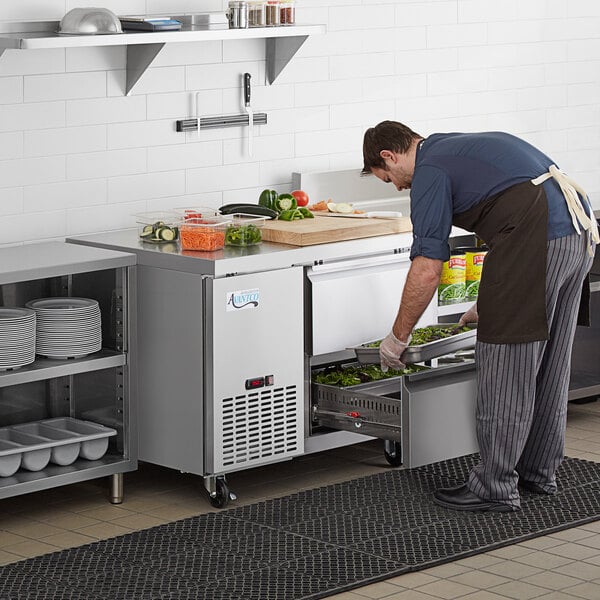
In today’s fast-paced foodservice and hospitality industry, space efficiency and operational speed are just as important as food safety and temperature control. This is where the undercounter refrigerator and undercounter freezer play a vital role. Designed to fit seamlessly beneath countertops, these compact refrigeration units deliver professional-grade performance without occupying valuable floor space.
From restaurants and cafés to hotels, bakeries, and cloud kitchens, undercounter cold storage solutions have become an essential part of modern kitchen design. This article explores what undercounter refrigerators and undercounter freezers are, their benefits, applications, key features, and how to choose the right unit for your business.
What Is an Undercounter Refrigerator?
An undercounter refrigerator is a compact refrigeration unit specifically designed to be installed beneath a standard counter height. Despite its smaller footprint, it offers reliable cooling performance comparable to full-size commercial refrigerators.
These units are commonly used for storing ingredients, beverages, dairy products, sauces, and prepped food items that need to be easily accessible during service. By keeping chilled items within arm’s reach, undercounter refrigerators help streamline workflows and reduce unnecessary movement in the kitchen.
Common Configurations
Solid door or glass door models
Single, two-door, or multi-section designs
Drawer-style undercounter refrigerators
Front-breathing systems for built-in installation
What Is an Undercounter Freezer?
An undercounter freezer serves a similar purpose but is designed to maintain sub-zero temperatures for frozen food storage. These units are ideal for storing frozen meats, seafood, desserts, ice cream, and backup ingredients without relying on a large walk-in freezer.
Undercounter freezers are particularly useful in kitchens where quick access to frozen items is essential, such as pastry stations, prep areas, and bar service zones.
Typical Variants
Solid door undercounter freezers
Drawer-style undercounter freezers
Compact units for tight kitchen layouts
Key Benefits of Undercounter Refrigerators and Freezers
1. Space Optimization
One of the biggest advantages of an undercounter refrigerator or undercounter freezer is efficient use of space. These units utilize otherwise unused space beneath counters, making them perfect for small kitchens or high-density work areas.
2. Improved Workflow Efficiency
Having chilled and frozen ingredients right at the workstation significantly reduces prep time. Chefs and kitchen staff can work faster and more efficiently without constantly walking to a walk-in refrigerator or freezer.
3. Consistent Temperature Control
Modern undercounter refrigeration units are built with advanced temperature control systems that ensure consistent cooling. This helps maintain food safety standards and prevents spoilage.
4. Energy Efficiency
Many commercial undercounter refrigerators and undercounter freezers are designed with energy-efficient compressors and insulation. Compared to older models, newer units consume less electricity while maintaining optimal performance.
5. Versatile Installation
With front-breathing airflow and compact dimensions, undercounter units can be installed as built-ins or used as standalone equipment. This flexibility allows them to fit into a wide range of kitchen layouts.
Restaurants and Cafés
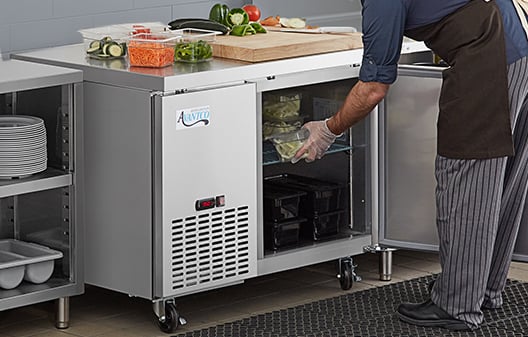
In restaurants, undercounter refrigerators are often placed near prep stations, grill lines, or salad counters. Undercounter freezers are commonly used for storing frozen proteins or desserts close to the cooking area.
Bars and Beverage Stations
Bars rely heavily on undercounter refrigerators for chilling beverages, mixers, garnishes, and dairy. Glass door models are especially popular for quick product visibility.
Bakeries and Patisseries
Bakeries use undercounter freezers to store frozen dough, butter, and fillings, while undercounter refrigerators are ideal for creams, chocolate, and temperature-sensitive ingredients.
Hotels and Catering Kitchens
Large commercial kitchens benefit from distributed cold storage. Instead of relying only on central walk-ins, undercounter units placed at different stations improve efficiency during peak service hours.
Cloud Kitchens and Food Trucks
Limited space makes undercounter refrigeration essential in cloud kitchens and mobile food operations. These compact units allow operators to maintain proper cold storage without sacrificing workspace.
Key Features to Look For
Temperature Range
A quality undercounter refrigerator should maintain temperatures between 0°C and 4°C, while an undercounter freezer should consistently operate at −18°C or below.
Construction and Durability
Commercial-grade stainless steel construction ensures durability, corrosion resistance, and easy cleaning. Look for reinforced doors and heavy-duty hinges for long-term use.
Storage Capacity
While compact, undercounter units vary in internal capacity. Choose a model that balances storage needs with available space.
Door Type
Solid doors offer better insulation and energy efficiency
Glass doors provide visibility and are ideal for beverage storage
Drawer systems improve organization and accessibility
Cooling System
Forced-air cooling systems ensure even temperature distribution, while front-breathing designs allow seamless undercounter installation.
Undercounter Refrigerator vs. Undercounter Freezer: Choosing the Right Option
The choice between an undercounter refrigerator and an undercounter freezer depends on your operational needs.
If your kitchen handles high volumes of fresh ingredients, dairy, produce, or beverages, an undercounter refrigerator is essential.
If frozen storage is critical for your menu, an undercounter freezer provides immediate access to frozen items without cluttering your workspace.
Many commercial kitchens use both units together to create a balanced and efficient cold storage setup.
Maintenance and Best Practices
Proper maintenance extends the life of your undercounter refrigerator and undercounter freezer.
Clean condenser coils regularly to maintain efficiency
Avoid overloading to ensure proper airflow
Check door seals for leaks
Monitor temperature settings daily
Routine maintenance not only improves performance but also helps reduce energy consumption and repair costs.
Why Undercounter Refrigeration Is a Smart Investment
Investing in an undercounter refrigerator or undercounter freezer is not just about saving space—it’s about improving productivity, maintaining food safety, and creating a smoother kitchen workflow. These compact units support faster service, better organization, and a cleaner kitchen environment.
As commercial kitchens continue to evolve toward smarter layouts and efficient equipment placement, undercounter refrigeration remains a practical and future-ready solution.
Conclusion
The undercounter refrigerator and undercounter freezer are indispensable tools in modern commercial kitchens. By combining compact design with powerful cooling performance, they help businesses maximize space, streamline operations, and maintain consistent food quality.
Whether you operate a restaurant, café, bakery, hotel, or cloud kitchen, choosing the right undercounter refrigeration solution can significantly enhance efficiency and day-to-day operations. With the right features, proper maintenance, and strategic placement, undercounter refrigerators and undercounter freezers deliver long-term value and reliability for any foodservice establishment.